বুধবার, ১৭ জুন ২০২৬, ১১:০৬ অপরাহ্ন


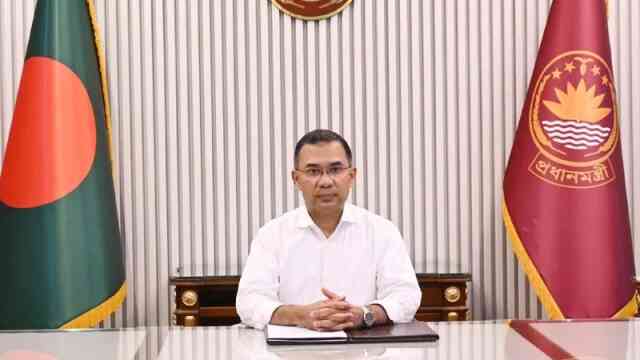
SANGSAD BHABAN, June 17, 2026 (BSS) – Prime Minister Tarique Rahman today informed the Jatiya Sangsad (JS) that the government has undertaken a wide-ranging plan to address the adverse impacts of climate change.
“Combating climate change has been given priority in the current government’s election manifesto. To tackle the adverse impact of climate change, multifaceted action plans and programmes have been undertaken, particularly in the water resources sector,” he said.
The Leader of the House said this while replying to a starred tabled question from treasury bench lawmaker from Tangail-6 constituency, Md Robiul Awal, in the House this afternoon with Speaker Hafiz Uddin Ahmad, Bir Bikram, in the chair.
The Prime Minister noted that Bangladesh is one of the most disaster-prone countries in the world due to its geographical location, dense population, extensive river system, and coastal features.
He said due to climate change, the frequency and intensity of cyclones, storm surges, floods, flash floods, river erosion, droughts, excessive rainfall, lightning, heatwaves and salinity intrusion increasing, adversely affecting livelihoods, agriculture, infrastructure, the environment and the economy.
Highlighting the major initiatives to address climate change, he said the Padma Barrage Project involving Taka 34,347 crore was approved on May 13 this year for implementation in the first phase.
The Prime Minister informed the House that the project will increase water flow in the Padma River during the dry season through water conservation, revive river systems in Padma-dependent areas, reduce salinity intrusion in the southern region, restore ecological balance in the Sundarbans, improve drainage systems, reduce waterlogging, expand irrigation facilities and enhance water security.
The project is also expected to generate 113 megawatts of hydropower and contribute an additional 0.45 percent growth to the country’s Gross Domestic Product (GDP), he added.
Tarique Rahman said in line with the current government’s election pledge, the nationwide programme for excavation and re-excavation of rivers, canals and water bodies is going on aimed at increasing use of surface water, improving irrigation and drainage systems, boosting agricultural production and improving environment.
As part of efforts to address the impact of climate change, the Prime Minister said, the government has launched a nationwide programme to plant 25 crore trees across the country over the next five years.
Like every year, annual tree fairs are being organized at national, divisional, district and upazila levels while a three-month-long tree plantation campaign will be conducted, he added.
Highlighting climate adaptation efforts, Tarique Rahman said the Bangladesh Climate Change Trust has prioritized research, innovation, training and extension activities to address climate risks.
Under these initiatives, he said, rural natural reservoirs will be developed in coastal districts to conserve rainwater and ensure safe drinking water supplies.
Special attention will be given to climate adaptation, secure livelihoods and economic inclusion in coastal areas, the premier said, adding, measures will also be taken to protect women, children, fishermen and other vulnerable groups from climate-related risks.
The government will further strengthen sustainable embankments, cyclone shelters and early warning systems to reduce the impact of cyclones and storm surges, he said.
The Prime Minister said Bangladesh has also taken an initiative to formulate a National Adaptation Plan (NAP) Investment Roadmap with support from the Asian Development Bank (ADB) to implement long-term climate adaptation measures under the United Nations Framework Convention on Climate Change.
Alongside adaptation efforts, the government has taken a step to prepare the Third Nationally Determined Contributions (NDC 3.0) to reduce greenhouse gas emissions responsible for climate change, he added.
Under the plan, the premier said, 25 percent of the total electricity demand will be met from renewable sources by 2035 and four Waste-to-Energy production plants and 26 Integrated Landfill and Resource Recovery Facilities will be established while afforestation and reforestation programmes will be implemented across 100,000 hectares of land in coastal, island and degraded areas.
He said work has also begun on preparing Long-Term Low Emission Development Strategies to reduce emissions.
The Leader of the House also said that a comprehensive carbon market framework has been prepared under Article 6 of the Paris Agreement, which will make the country’s participation in international and voluntary carbon markets orderly and transparent.
He said the government has transformed disaster management from a relief-based approach to a risk reduction framework, significantly reducing disaster-related casualties and damages. As a result, Bangladesh has earned international recognition as a successful model in disaster risk management, the premier added.
He said the government is expanding multidimensional early warning systems, digital forecasting technologies, community-based alert mechanisms, the Cyclone Preparedness Programme (CPP), flood forecasting and warning systems, and anticipatory actions for lightning, heatwaves and flash floods.
In addition, the Prime Minister said, disaster-related information is being disseminated to people at the grassroots level through Interactive Voice Response (IVR) services.