রবিবার, ২২ নভেম্বর ২০২৬, ০৪:০১ অপরাহ্ন



Bangladesh can raise Tk60,000 crore in the short term by gradually phasing out certain tax exemptions over three to four years, said Ahsan H Mansur, executive director of the Policy Research Institute (PRI).
“This could be implemented immediately, while other reform measures will take more time to design and implement,” he said at a discussion titled ‘Bangladesh’s Domestic Resource Mobilisation: Imperatives and a Roadmap’ organised by PRI in Dhaka today (30 April).
Dr Mansur’s proposal came amid discussions on the country’s complex tariff structure, the impact of high tariffs on exports, and the need for export diversification.
Also speaking on the occasion, Dhaka Chamber of Commerce and Industry President Ashraf Ahmed emphasised making tax collection easier through automation and reducing direct contact between taxpayers and tax officials.
He also advocated for giving small industries more time to grow before being taxed.
The event was attended by State Minister for Finance Waseqa Ayesha Khan, Advisor to the Prime Minister on Economic Affairs Mashiur Rahman, National Board of Revenue Chairman Abu Hena Md Rahmatul Muneem, Federation of Bangladesh Chambers of Commerce and Industries President Mahbubul Alam, Metropolitan Chamber of Commerce and Industry President Kamran T Rahman, Chattogram Stock Exchange Chairman Asif Ibrahim, former NBR chairman Mohammad Abdul Majid, and former NBR member (VAT policy) Jahangir Hossain among others.
Ahsan H Mansur said, “Currently, the country’s tax-GDP ratio is 7.6%, which is the lowest in South Asia. It is close to Somalia or Democratic Republic of Congo.
“If no reforms are made, this rate will decrease further in the coming years. And it is not possible to reach high income countries with less than 10% tax-GDP ratio.”
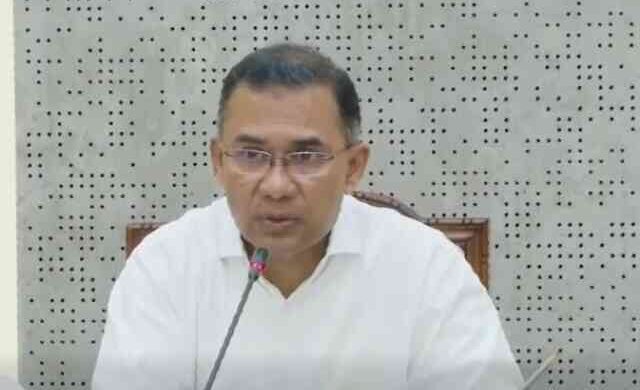
Disagreeing with this statement, the NBR chairman said, “Everyone enthusiastically says that the tax-GDP ratio in the country is disappointing. But I don’t see it that way. It is not right to compare it with that of Somalia or Congo. If you compare with those countries, you have to compare all the parameters.”
He also said, “The important thing is to look at the source of revenue of those who have a high tax-GDP ratio. For example, the tax-GDP ratio of Maldives is high. Their main source of revenue is the tourism sector. But we do not have such a source.”