রবিবার, ২২ নভেম্বর ২০২৬, ০৩:১৪ অপরাহ্ন



The International Chamber of Commerce-Bangladesh (ICCB) has pinpointed 10 significant challenges facing the Bangladeshi economy in 2024.
These include high inflation, a balance of payment deficit coupled with budget shortfalls, a decrease in foreign exchange reserves, declining remittances, currency depreciation, increasing income inequality, energy sector demand-supply imbalances, and a struggling banking sector plagued by loan defaults.
The trade body further said that Bangladesh has been unable to curb inflation, a stark contrast to many other countries that have successfully managed their inflation. These observations were presented in the editorial of the current News Bulletin for January-March 2024 by the ICCB.
It says Bangladesh has demonstrated remarkable development progress in the last five decades. The country’s journey from one of the poorest countries at independence to a lower-middle-income nation within four decades is a testament to its resilience, policy decisions, and commitment to reducing poverty and fostering shared prosperity, said the World Bank in its recent publication “World Bank in Bangladesh in 2024”.
With several major infrastructure projects reaching completion, such as the Padma Multi-Purpose Bridge, Dhaka Elevated Expressway, Bangabandhu Tunnel, linking Dhaka to the tourist haven of Cox’s Bazar, 3rd terminal at Hazrat Shahjalal International Airport, 2024 is anticipated to be a year to reap the benefits.
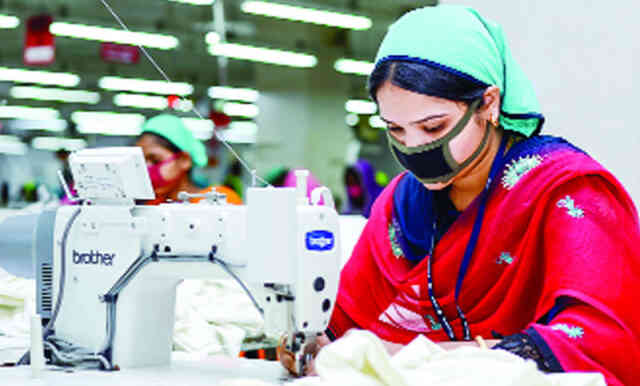
Despite impressive growth rates, Bangladesh faces challenges in its export basket’s diversification; more than 80 percent of the country’s total export earnings come from garment exports. Bangladesh has significant opportunities in leather, and footwear, food processing, pharmaceuticals, light engineering, assembling plants, and API production. Both domestic investment and FDI will need to be geared towards these sectors.
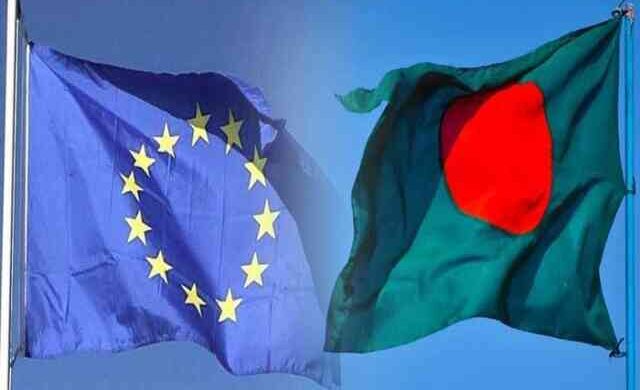
However, Bangladesh after its LDC graduation in November 2026, will experience significant preference erosion. Although the EU and UK have offered to extend preferential duty-free market access for an additional three years, the export scenario to other markets will change immediately after graduation. Bangladesh has a greater opportunity of increasing export to ASEAN, having a population of 661 million with a GDP of $3.08 trillion and trade exceeding $2.7 trillion. According to 2020 data, Bangladesh imports goods worth nearly US$7.0 billion from ASEAN countries as against its export of only $1.0 billion. So, Bangladesh should give priority to having a Free Trade Agreement with ASEAN in order to increase its exports.
The ICCB also finds that despite developing economic zones, adopting one-stop services and various other steps, Bangladesh is far behind Maldives and Sri Lanka in attracting FDI. Bangladesh is the second-largest economy in the South Asian region. Vietnam, comparable to Bangladesh, ranked fourth in Asia-Pacific after China, India, and Indonesia in attracting FDI. The majority of total FDI inflows of $274 billion at the end of 2022 into Vietnam were in the manufacturing sector, which accounts for 61 percent of the total registered FDI. Bangladesh received an annual average of $2.92 billion in FDI as against Vietnam’s $36.61 billion. FDI is one of the key elements for increasing export earnings and much needed foreign exchange reserve, Bangladesh should review its strategy for attracting FDI.
Bangladesh is facing an energy crisis due largely to reliance on imported fuels which is estimated at about US$ 2.5 billion a year for power generation and also a lack of renewables and cleantech alternatives. In fact, instead of moving towards exploring renewable energy sources, Bangladesh turned to the use of more fossil fuels such as coal, oil and LNG. With a depreciating currency, a reliance on imported fuels for power generation has led to significant rise in power generation costs.
Climate change is a critical issue in Bangladesh as it is one of the most vulnerable countries to the effects of climate change, according to German watch’s 2021 Global Climate Risk Index, Bangladesh ranked seventh in the list of countries most affected by climate calamities during the period 2000-2019.
The Business Standard