শনিবার, ২০ জুন ২০২৬, ০৮:২১ অপরাহ্ন



DHAKA, June 20, 2026 (BSS) – Bangladesh’s healthcare sector is poised for a major transformation as the government rolls out an ambitious package of reforms, combining a record health budget, universal digital health cards, massive workforce recruitment and new specialized hospitals to expand affordable healthcare services nationwide.
The proposed national budget for fiscal year 2026-‘27 and a series of recent initiatives reflect a comprehensive strategy aimed at building a more accessible, prevention-focused and technology-driven healthcare system while reducing the financial burden on patients.
At the center of this transformation is the government’s decision to nearly double the health sector allocation to Tk 69,409 crore from the revised Tk 35,477 crore in the outgoing fiscal year.
The allocation represents about 1.01 percent of the country’s Gross Domestic Product (GDP), marking a significant step toward the government’s longer-term commitment to increase health spending.
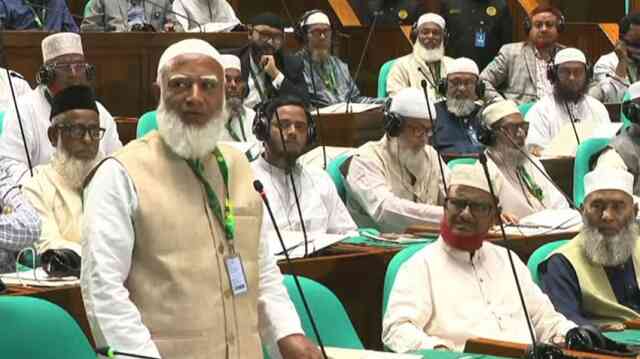
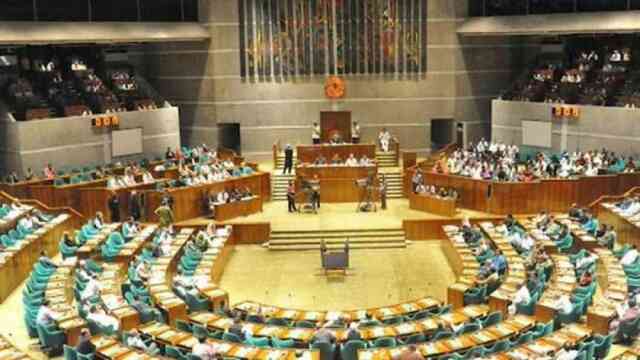
Presenting the budget in parliament on June 11, Finance Minister Amir Khosru Mahmud Chowdhury described healthcare investment as a cornerstone of human resource development and national prosperity.
The government believes that strengthening healthcare services is essential not only for improving public health outcomes but also for supporting economic productivity and social welfare.
A key feature of the government’s health agenda is a strategic shift from a treatment-centered healthcare model to one that prioritizes prevention, early diagnosis and community-based services.
To achieve this goal, the government has begun implementing plans to establish modern primary healthcare units in every union and urban ward across the country.
Each unit will be supported by community clinics and trained health workers providing preventive care, maternal and child health services, nutrition support and basic treatment at the grassroot level.
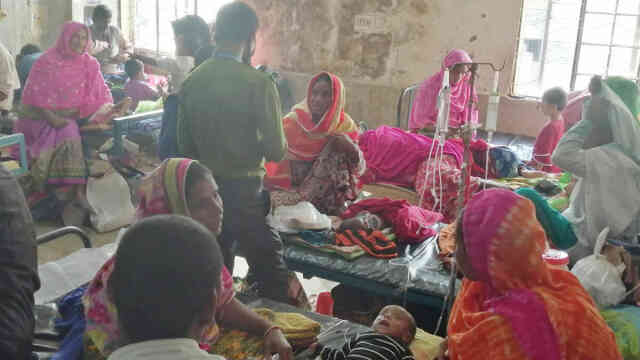
Officials believe the initiative will reduce pressure on overcrowded hospitals, improve access to healthcare in underserved areas and lower out-of-pocket medical expenses for ordinary citizens.
The expansion of the healthcare workforce is another major component of the reform agenda.
The government has announced the immediate recruitment of 5,000 MBBS doctors to fill long-standing vacancies in hospitals and health institutions. Besides, plans have been drawn up to recruit 100,000 health workers, around 80 percent of whom are expected to be women.
The expanded workforce is expected to strengthen maternal and child healthcare services, disease prevention programmes and community-based healthcare delivery systems. The government has already created hundreds of additional nursing and midwifery positions to support these efforts.
Digital transformation also occupies a central place in the government’s healthcare strategy.
Under a proposed universal health coverage framework, every citizen will gradually receive a digital Health Card linked to an Integrated Patient Management and Referral System. The platform will enable healthcare providers to access patients’ treatment histories, diagnostic records and prescriptions from any healthcare facility across the country.
Health experts believe such a system can improve continuity of care, reduce duplication of medical procedures and strengthen accountability throughout the healthcare network.
The government’s reform plans extend beyond service delivery to medical education and healthcare human resource development.
A modern competency-based MBBS curriculum incorporating artificial intelligence and advanced clinical training methods is expected to be introduced by 2030.
Authorities say the reforms are designed to produce physicians capable of addressing future healthcare challenges while aligning medical education with international standards.
The government also plans to introduce student loan and bank loan facilities for medical and dental students. A special financing programme is being considered for talented students pursuing higher studies abroad so that financial constraints do not hinder academic advancement.
Alongside educational reforms, authorities have announced plans to upgrade academic buildings, laboratories, libraries, dormitories and training facilities at government medical colleges throughout the country.
The budget also includes measures aimed at reducing treatment costs for patients suffering from chronic illnesses.
The withdrawal of taxes and VAT on heart stents, dialysis filters and several other critical medical products will bring significant relief to thousands of patients.
Officials estimate that the price of heart stents may decrease by up to Tk 20,000, while the cost of dialysis treatment could fall by around Tk 800 per session.
Healthcare analysts view these measures as important steps toward reducing out-of-pocket expenditure, which remains one of the major challenges facing Bangladesh’s health sector.
Meanwhile, recent government initiatives indicate that healthcare expansion is already moving beyond policy announcements.
One of the most significant ongoing projects involves operationalisation of five specialized 200-bed children’s hospitals in Khulna, Barishal, Rangpur, Rajshahi and Cumilla.
According to the Health Ministry, these hospitals are expected to begin operations within the next six months. Equipped with intensive care units, central air-conditioning systems and advanced diagnostic facilities, the hospitals are expected to substantially improve pediatric healthcare services outside the capital.
Preparations are progressing rapidly, with procurement of furniture and medical equipment largely completed and recruitment processes underway.
Health and Family Welfare Minister Sardar Md. Sakhawat Husain recently said the facilities would provide specialized treatment services closer to patients’ homes, reducing the need for families to travel long distances for paediatric care.
The planned launch of the children’s hospitals also reflects the government’s broader effort to activate completed but unused healthcare infrastructure and bring more specialized services to regional populations.
Taken together, the increased budget allocation, workforce expansion, digital health initiatives, medical education reforms, tax relief measures and new specialized hospitals signal an effort to reshape Bangladesh’s healthcare landscape.
As implementation moves forward, policymakers hope these initiatives will help create a healthcare system that is more equitable, efficient and responsive to the needs of citizens, while ensuring that quality medical care becomes increasingly accessible regardless of location or income.