বুধবার, ০৮ জুলাই ২০২৬, ০৮:৩৯ অপরাহ্ন



In response to a question from Tangail-6 MP Md Robiul Awal during the question-and-answer session, the prime minister said the government remains committed to balanced regional development, sustainable employment and building skilled human resources.
Highlights:
Employment Exchange Centres to be set up nationwide to improve job matching and skills services.
New overseas labour markets targeted alongside efforts to reopen Malaysia and expand access to Gulf countries.
Visa centres planned in Dhaka for North Macedonia, Serbia, Mauritius and Portugal.
Japan and South Korea recruitment to expand through dedicated programmes and seasonal worker schemes.
Language training under BMET to be strengthened to prepare more workers for overseas jobs
The government plans to establish employment exchange centres nationwide while stepping up diplomatic efforts to expand overseas labour markets, Prime Minister Tarique Rahman told parliament today (8 July).
In response to a question from Tangail-6 MP Md Robiul Awal during the question-and-answer session, the prime minister said the government remains committed to balanced regional development, sustainable employment and building skilled human resources.
Increasing young people’s participation in domestic and overseas job markets through skills development is one of its key priorities, he added.
Tarique said the planned employment exchange centres, outlined in the government’s election manifesto, will provide local employment information, skills development services and better access to jobs.
They are expected to make the domestic labour market more effective and institutionalised while creating new employment opportunities and improving workers’ livelihoods, he stated.
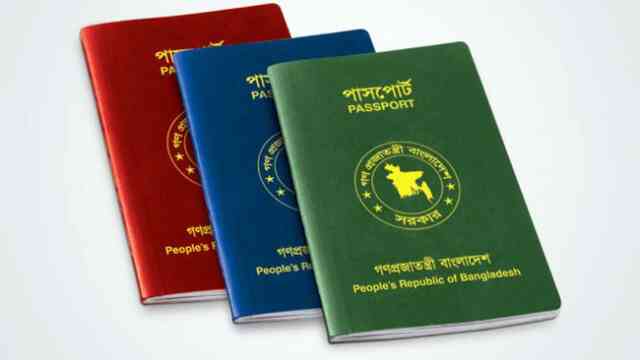
The prime minister said the government is pursuing new overseas job opportunities alongside efforts to reopen the Malaysian labour market in response to instability in the Middle East, adding that initiatives have also been taken to increase manpower exports to Thailand, South Korea and Japan.
He said the final draft of a worker recruitment agreement has been sent to the Thai government, while Bangladeshi missions abroad have been instructed to assess local labour demand and submit action plans to boost manpower exports.
According to the prime minister, diplomatic efforts are continuing to reopen or expand labour markets in Malaysia, Oman, Bahrain and the United Arab Emirates.
He said Qatar expressed interest in recruiting skilled Bangladeshi workers in various professions during the seventh Bangladesh-Qatar Joint Committee meeting in Dhaka on 18 May.
Bangladesh is also planning to sign new labour agreements with several other Asian countries, he added.
The government is also working to establish visa centres in Dhaka for North Macedonia, Serbia, Mauritius and Portugal, where opportunities exist for skilled Bangladeshi workers but no visa centres are currently available, he said.
The prime minister said meetings held on 5 March, 24 March and 5 April this year resulted in decisions to reopen closed labour markets and expand new ones.
He added that memoranda of understanding are being signed with local governments in South Korea to send seasonal workers, while state-owned Boesl has already begun sending them.
To expand employment opportunities in Japan, a Japan cell has been formed under the Ministry of Expatriates’ Welfare and Overseas Employment, bringing together 96 sending organisations, more than 200 private Japanese language training centres and 60 Technical Training Centres, he said.
He also said the government will expand demand-based language training under the Bureau of Manpower Employment and Training (BMET) and increase the number of training institutions. Japanese, English, Chinese and Korean courses are currently offered at 60 Technical Training Centres, where language teachers are also being recruited.