সোমবার, ০২ নভেম্বর ২০২৬, ০৩:০৬ অপরাহ্ন



DHAKA, Nov 2, 2026 (BSS) – The BNP government’s Tk 34,497 crore Padma Barrage project is expected to bring significant changes to Bangladesh’s water management, agriculture, fisheries, economy and environmental protection, particularly in the southwestern region, by addressing longstanding water shortages, salinity and river degradation.
The project, once fully implemented, will enable the storage of monsoon water for controlled distribution during the dry season, helping reduce water scarcity, improve irrigation, address waterlogging and create new opportunities for flood management and riverbank erosion control.
It is also expected to reduce salinity in water and soil, restore the flow and navigability of major river systems, protect the Sundarbans and strengthen food security.
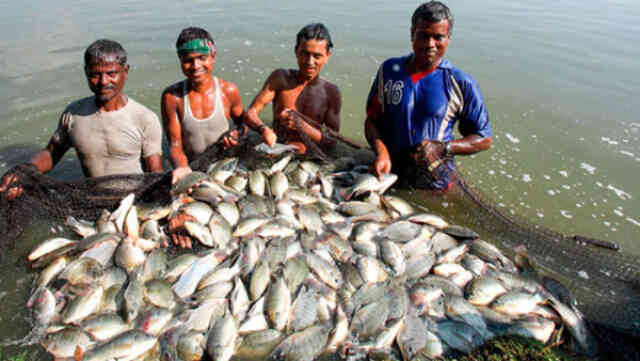
According to the Bangladesh Water Development Board (BWDB), the project is expected to generate annual economic benefits worth Tk 7,127 crore, including an estimated increase of around 250,000 tonnes in fish production every year.
Experts believe that successful implementation will have significant direct and indirect impacts on agricultural production, employment, the environment, the national economy and people’s livelihoods.
State Minister for Water Resources Forhad Hossain Azad told BSS that approximately seven crore people in 120 upazilas across 19 districts under four divisions would directly benefit from the project.
He said the project will have a substantial positive impact on agriculture and the economy, while creating employment opportunities for several hundred thousand people.
Providing an update on implementation, the state minister said preparatory work had started well in advance and a separate office dedicated to the Padma Barrage project had been established at Pani Bhaban.
He said he visited the proposed project site at Habaspur in Pangsha, Rajbari, on September 11.
On October 25, he also inspected the proposed barrage area near Kanchan Park in Satbaria, Sujanagar upazila of Pabna.
The project’s progress is gaining momentum, he said, adding that if everything goes according to plan, Prime Minister Tarique Rahman will inaugurate the visible construction work in February.
Warning about the long-term consequences of rising salinity, Azad said parts of the southwestern region will be increasingly difficult for human habitation over the next 25 to 30 years if the situation continues to deteriorate.
The natural environmental balance, fisheries and other wildlife may also suffer serious damage, he added.
He expressed optimism that the Padma Barrage would usher in a new era of prosperity for the southwestern region.
The Executive Committee of the National Economic Council (ECNEC), chaired by Prime Minister Tarique Rahman on May 13, approved the project at an estimated cost of Tk 34,497 crore.
The entire approved expenditure will be financed from the government’s own resources, although the project cost is expected to increase further during the second phase.
According to the project schedule, construction is expected to be completed by June 2033.
The Planning Commission said the project was one of the major electoral commitments of the BNP government and was designed primarily to protect the agriculture, environment and economy of southwestern Bangladesh and address dry-season water shortages.
Under the project, the main barrage infrastructure will be constructed in Pangsha upazila of Rajbari district.
The proposed barrage will be approximately 2.1 kilometres long and comprise 78 spillway gates, 18 under-sluices, two fish passes, a navigation lock, guide bunds and approach embankments.
It is designed to store approximately 2,900 million cubic metres of water and will also include facilities to generate 113 megawatts of hydropower.
Upon implementation, the project is expected to provide irrigation facilities to approximately 28.80 lakh hectares of agricultural land across the greater Kushtia, Faridpur, Jashore, Khulna, Barishal, Pabna and Rajshahi regions.
It will also support the existing Ganges-Kobadak (G-K) Irrigation Project and the proposed North Rajshahi Irrigation Project, expanding irrigation facilities across southwestern, west-central and northwestern Bangladesh.
The initial phase of the project will cover 19 districts across four divisions.
These are Kushtia, Meherpur, Chuadanga, Jhenaidah, Magura, Jashore, Narail, Bagerhat, Khulna and Satkhira in Khulna Division, Rajbari, Faridpur and Gopalganj in Dhaka Division, Pabna, Rajshahi, Natore, Naogaon and Chapainawabganj in Rajshahi Division and Pirojpur in Barishal Division.
A major objective is to restore the flow and navigability of important river systems, including the Hisna-Mathabhanga, Gorai-Madhumati, Chandana-Barasia, Baral and Ichamati.
The project also aims to reduce salinity in Satkhira, Khulna and Bagerhat, ensure freshwater supplies to the Sundarbans and protect biodiversity.
Other objectives include resolving waterlogging in areas such as Bhobdaho in Jashore, improving drainage systems, facilitating groundwater recharge and reducing arsenic contamination.
The need for the project has become increasingly pressing as rivers across southwestern Bangladesh face declining dry-season flows, silt accumulation and rising salinity.
Following the construction of the Farakka Barrage in India’s West Bengal during the 1970s and the diversion of water during the dry season, the flow of the Padma River in Bangladesh declined significantly.
Consequently, several rivers, including the Hisna-Mathabhanga, Gorai-Madhumati, Chandana-Barasia, Ichamati and Baral, have experienced severe deterioration.
During the dry season, reduced freshwater availability has increased salinity in rivers and canals, making access to safe drinking water difficult for coastal communities.
Farmers increasingly depend on groundwater extraction for irrigation, contributing to declining groundwater levels and concerns over arsenic contamination.
The decline in river flows has also affected fish production, leaving many fishermen unemployed.
River-based transportation has been disrupted, while freshwater shortages have placed additional pressure on the biodiversity of the Sundarbans.
Meanwhile, the Ganges Water Sharing Treaty, signed between Bangladesh and India on December 12, 1996, is due to expire in December this year, adding to concerns over the region’s long-term water security.
According to BWDB data, the Padma River stretches approximately 341 kilometres within Bangladesh. Over the past two decades, an estimated 8,000 to 10,000 hectares or more of agricultural land in different Padma riverine areas have been affected by riverbank erosion.
On average, 10,000 to 15,000 families living along the river face direct risks from erosion every year.
Experts believe that regular dredging, construction of riverbank protection embankments and improved river-flow management could potentially reduce riverbank erosion by 30 to 50 per cent.
Professor Mashfiqus Salehin of the Institute of Water and Flood Management at the Bangladesh University of Engineering and Technology (BUET) told BSS that excessive salinity had created serious drinking water shortages in southwestern Bangladesh.
He warned that salinity in the Sundarbans and the wider southwestern region could increase further in the future, while sediment accumulation could aggravate waterlogging.
Salehin said ensuring adequate freshwater supplies and maintaining water flows through the region were essential to addressing these challenges, adding that the Padma Barrage could play a significant role.
According to the professor, the project could help revive the river systems of southwestern Bangladesh and reduce salinity in both water and soil, creating substantial opportunities for the region.
However, he stressed that natural river flows, sediment deposition, riverbank erosion, upstream river erosion and ecological balance must be carefully monitored during construction and implementation to avoid unintended environmental consequences.
State Minister for Cultural Affairs and President of the National Committee for Implementation of the Padma Barrage-Second Padma Bridge initiative, Ali Newaz Mahmood Khyom, described the project as extremely important for Bangladesh’s national interests.
Speaking to BSS, he said the Farakka Barrage had adversely affected nearly one-third of Bangladesh’s land, while also creating negative consequences for navigation, access to safe drinking water and the biodiversity of the Sundarbans.
He said agriculture, the economy, livestock resources and people’s livelihoods had been affected in various ways, making the Padma Barrage an essential initiative to address these challenges.
Khyom said the initiative to construct the Padma Barrage was first taken by Shaheed President Ziaur Rahman.
Former Prime Minister Begum Khaleda Zia renewed the initiative around 2004, but it could not be implemented at that time.
He said the issue was subsequently brought back into focus through campaigns and movements demanding implementation of the project.
The state minister said Prime Minister Tarique Rahman has taken the initiative to construct the barrage and work is progressing accordingly.
He expressed hope that the project would become a visible reality in the near future, bringing broad social, economic and environmental benefits to the country.
The Padma Barrage is being considered a major long-term intervention to address water scarcity, revive river systems, improve agricultural productivity and protect the livelihoods of millions of people in southwestern Bangladesh.
Its success, however, will depend on effective implementation and careful management of river flows, sedimentation and environmental impacts.