রবিবার, ০১ নভেম্বর ২০২৬, ০২:২৯ অপরাহ্ন


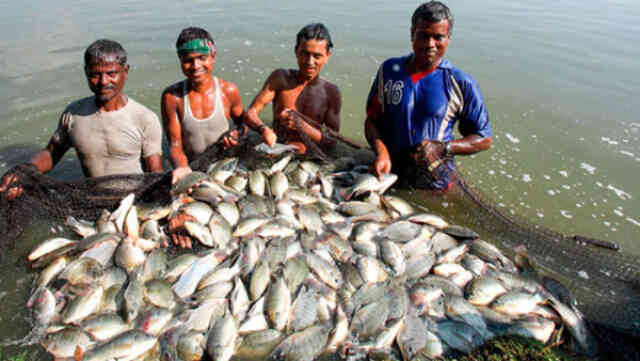
DHAKA, Nov 1, 2026 (BSS) – An eight-month ban on the harvesting, transportation, storage, marketing, and wholesale or retail sale of juvenile hilsa, locally known as Jatka, has officially commenced today to boost the production of the national fish hilsa, ensure the sustainable conservation of aquatic biodiversity, and meet national protein demands.
According to a press release issued by the Ministry of Fisheries and Livestock, this legal directive came into effect across the country today (1 November) and will remain in force until 30 June 2027.
Long-term field data from hilsa researchers and scientists at the Bangladesh Fisheries Research Institute (BFRI) indicates that the 22-day successful nationwide ‘Mother Hilsa Conservation Campaign-2026’, conducted from 8 to 29 October, has resulted in the birth of billions of new hilsa fry in the rivers. These juveniles are currently roaming the coastal rivers, estuaries, and tributaries.
Biological tests conducted by scientists reveal that these fry, measuring 3 to 5 centimetres at the beginning of November, grow at an average rate of 3 to 3.5 centimetres per month. If given the opportunity to grow naturally and without interruption during this eight-month window, they will transform into mature and commercially profitable hilsa, measuring 25 to 30 centimetres in length and weighing around 400 grams, by May-June next year.
Under the Protection and Conservation of Fish Act, catching, transporting, storing, marketing, or trading hilsa smaller than 25 centimetres (or 10 inches) in size during this eight-month period is a completely punishable offence.
A zero-tolerance policy has been adopted on the rivers to completely curb the use of banned current nets, behundi nets (set bag nets), mosquito nets, and monofilament synthetic nets.
According to the notification from the Ministry of Fisheries and Livestock, strict penal provisions are in place under the fish conservation rules against those violating the regulations.
The penalties include a minimum of one year to a maximum of two years of rigorous imprisonment, an immediate financial fine of up to Taka 500,000, or both. Depending on the severity of the offence, the court can award both imprisonment and a financial penalty simultaneously.
To ensure immediate punishment for lawbreakers, mobile courts led by executive magistrates are functioning round-the-clock in riverine districts and upazilas, in coordination with the Department of Fisheries (DoF) and the local administration.
A powerful joint task force comprising the armed forces and law enforcement agencies has been formed alongside the Department of Fisheries to implement the law strictly at the field level.
According to notifications from the headquarters of the Bangladesh Navy and the Coast Guard, their special command teams are deployed for round-the-clock patrolling with large vessels and speedboats in the deep sea and coastal river estuaries. Simultaneously, the River Police will maintain constant surveillance across the country’s six river sanctuaries.
Special operations will also be conducted by the Rapid Action Battalion (RAB), Police, and Border Guard Bangladesh (BGB) to prevent the illegal transport and storage of jatka at land checkpoints, wholesale fish markets, and cold storage facilities.
To sustain the livelihood of registered fishermen and ensure rural food security during the ban period, the Ministry of Disaster Management and Relief has secured a special humanitarian assistance initiative through Vulnerable Group Feeding (VGF) rice allocations.
Under this scheme, hundreds of thousands of card-holding registered fishermen families across 96 upazilas in 20 major hilsa-prone districts will receive 40 kilograms of VGF rice completely free of charge every month.
Fisheries scientists believe that while the 22-day mother hilsa protection campaign in autumn ensures the birth of hilsa in the rivers, the eight-month jatka protection law effective from 1 November ensures their growth and maturity. This coordinated scientific and legal success has enabled Bangladesh to maintain the top spot globally in hilsa production.