শুক্রবার, ৩০ অক্টোবর ২০২৬, ০১:২২ অপরাহ্ন



DHAKA, Oct 30, 2026 (BSS) – Marginal farmers across the country have expressed immense relief following the BNP-led government’s decision to waive agricultural loans along with interest, benefiting 14, 34,482 farmers and sparking new momentum in the rural economy.
To free the farmers from long-standing debt burdens and default-related barriers to securing fresh bank credit, the government paid a total of Tk 1,352.74 crore (principal and interest combined) directly to the banks.
Marginal farmers are now turning their full attention back to cultivation.
Economists and experts view this initiative-part of the current government’s electoral promises and farmer-friendly policies-as a crucial step toward breaking the grip of high-interest informal moneylenders and reintegrating farmers into the formal banking system.
Under the program, the government completely waived both principal and accrued interest for farmers who had taken loans up to Tk 10,000, regardless of the defaulted amount.
Welcoming the move, prominent economist Prof Abu Ahmed told BSS that, “The decision to waive agricultural loans along with interest is a great gift for marginal farmers. This initiative will have a strong positive impact on the rural economy.”
He noted that supporting farmers boosts domestic yields, which in turn strengthens national food security and the broader economy. “To make farmers sustainably self-reliant, top priority should be given to reducing production costs, ensuring agricultural inputs, and providing targeted subsidies,” he added.
Prof Abu Ahmed cautioned that reliance on food imports during global market crises can prove costly, as key exporting nations like Vietnam and Thailand raise prices during shortages. He emphasized prioritizing domestic agriculture to safeguard national food security, while noting that loan waivers provide immense financial relief, further support may be required for farmers holding larger loans.
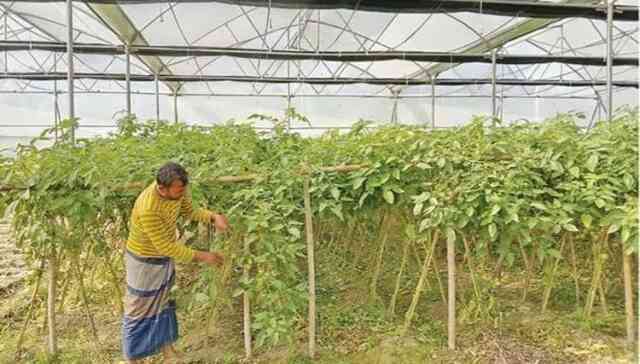
Farmers in Jhashore Sadar Upazila shared their firsthand experience of the relief brought by the waiver.
Faruqe Hossain, a farmer from Narangali village under Deara Union, said he had been living in constant stress over a defaulted Tk 10,000 loan and was preparing to sell his trees or cattle to clear the debt. “A huge burden has been lifted from people like me. I didn’t have to sell my trees or livestock-my last resort in times of distress,” he said.
Similarly, Md Mohiuddin from Jhaudia village under Churamonkati Union expressed his gratitude: “I was under immense pressure over a Tk 10,000 loan I couldn’t repay. Before the election, BNP promised to waive these loans if elected, and right after forming the government, they fulfilled it. I had nothing left to sell, and the government saved me.”
Other local farmers, including Idris Ali from Rupdia village and Haidar Ali from Malanchi village, expressed similar relief.
Bangladesh Krishi Bank accounted for the largest share, waiving Tk 604.81 crore in loans for 709,679 marginal farmers. The remaining 724,803 farmers received waivers totaling nearly Tk 747.93 crore through Rajshahi Krishi Unnayan Bank, state-owned commercial banks, and private commercial banks.
The entire process was completed directly between the government, Bangladesh Bank, and participating banks under a streamlined policy to ensure farmers faced no bureaucratic harassment.
According to preliminary estimates by the Bangladesh Bureau of Statistics (BBS), agriculture contributed 11.85 percent to the GDP in the 2025-2026 fiscal year. However, the disbursement targets set for banks in the agricultural and rural credit sector were only 2.23 percent of total loans and advances, and 2.95 percent of net loans and advances.
To drive GDP growth and control inflation through increased agricultural output, Bangladesh Bank is prioritizing credit flow to the sector. For the current 2026-2027 fiscal year, the central bank raised the agriculture and rural credit target to 4 percent of banks’ net loans and advances, setting a target of Tk 60,000 crore-a 53.85 percent increase over the previous fiscal year.
In the 2025-2026 fiscal year, banks disbursed Tk 42,834.16 crore in rural and agricultural credit, exceeding the Tk 39,000 crore target. This marked a 14.76 percent (Tk 5,507.64 crore) increase compared to the Tk 37,326.52 crore disbursed in FY 2024-2025.
Experts believe that because the government reimbursed the banks directly for the waived loans, local rural branches and specialized banks will overcome liquidity shortages. This direct settlement is expected to stimulate new credit flow, revitalize rural economic activities, and keep farmers away from predatory informal lending.