শুক্রবার, ৩০ অক্টোবর ২০২৬, ০১:২৫ অপরাহ্ন


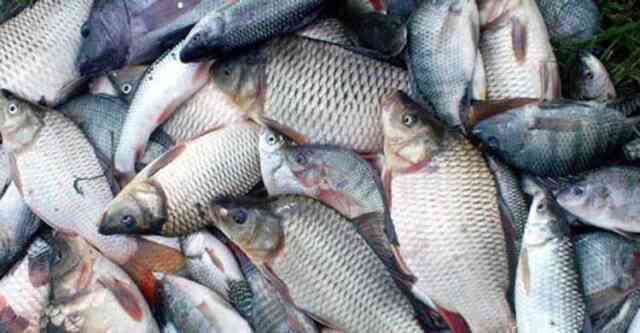
RAJSHAHI, Oct 30, 2026 (BSS)- Digging ponds on land meant for paddy and other traditional crops to farm fish has now completely transformed the rural economy of the Rajshahi division.
Fresh fish like Rui, Katla and various carp species from the ponds of this region are reaching at least 28 districts of the country, including the capital Dhaka.
Due to this system of transporting fish alive using special technology, on average more than Taka 20 crore worth of fish is being traded daily from the Rajshahi division.
According to information provided by the Department of Fisheries, there are currently 4,49,653 ponds across the division, with about 1,65,706 farmers engaged in fish farming.
The total annual fish production in the division is about 5,96,467 metric tons. After meeting local demand, an additional 1.5 lakh metric tons of fish is being sent to other parts of the country.
Around 3 lakh people have found employment in this region centered solely on production and marketing, and a significant portion of it is now being exported abroad as well.
In recent years, as they have not been getting the desired profit from traditional agricultural production, a large section of farmers in the Rajshahi region has turned to commercial fish farming.
As the fisheries sector is more profitable compared to other crops, new entrepreneurs are joining this profession every day.
Saifuddin Yahia, Divisional Director of the Department of Fisheries, said that while mixed farming was previously done only in Rajshahi district, this technology has now spread to all 8 districts of the division, including Natore and Naogaon.
Alongside Rui and Katla, integrated farming of Silver Carp and various indigenous species in the same pond is helping maintain the ecological balance of the ponds.
In addition, by farming high-value fish like Pabda, Shing, Koi and Magur, farmers are also making a place for themselves in the international market.
In particular, Pabda fish from this region is currently being regularly exported to India. With the help of the district administration, more than 1,500 farmers are being trained every year in modern technology and quality control.
According to relevant sources, the process of sending fresh fish from Rajshahi to Dhaka and other distant places started about 24 years ago.
Previously, oxygen was kept circulating during transport by having people manually stir the water in the tanks, but now shallow machines are installed on trucks to artificially create water flow.
As a result, the fish remain as alive as they were in the pond until they reach their destination after a long journey.
From afternoon until early dawn every day, fresh fish is sent to different districts of the country in more than 500 specialized trucks.
On average, 700 to 1,200 kg of fish is transported in each of these daily trips.
Mosharraf Hossain, a long-time trader from Parila village in Paba upazila, said that recently he took 1,200 kg of fish in one truck to New Market in Dhaka and sold it for Taka 3 lakh.
About 50 trucks leave daily for different parts of the country from the Parila area alone.
One of the most successful examples of this fisheries revolution in Rajshahi is entrepreneur Golam Saklain from Durgapur upazila.
In 1994, while studying in the Department of Chemistry at Rajshahi University, he started fish farming on 2 bighas of land with a capital of only Taka 7,000.
After finishing university, he devoted himself entirely to this profession. Currently, his leased farm covers about 1,000 bighas, where 152 workers are regularly employed.
About 20 trucks of fish are supplied to Dhaka daily from his farm alone. Even though production has increased, farmers are facing various adversities.
Farmers including Idris Ali from Durgapur and other local farmers said that although the price of processed fish feed has increased abnormally in the market, they are not getting a proportionate price for fish in the market.
In addition, due to fuel and other costs, they have to pay an extra 3,000 to 4,000 taka in transportation cost per truck, which is greatly reducing the farmers’ profits.
Despite all the challenges, this innovative system of delivering live fish to distant places while maintaining quality has opened a new dimension in the rural economy of Rajshahi.
This continuous success of the fisheries sector has now crossed local boundaries and is making a major contribution to the national economy of the country as well.