সোমবার, ১৩ জুলাই ২০২৬, ০৭:০৭ অপরাহ্ন


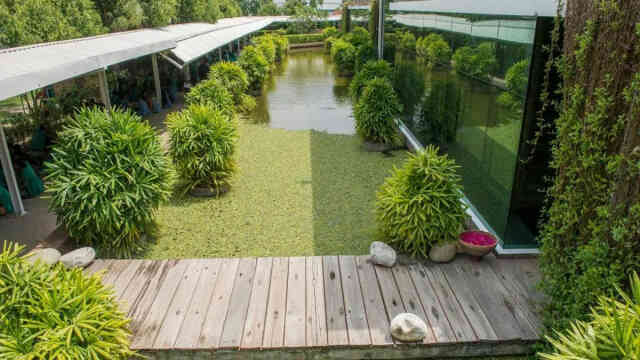
DHAKA, May 3, 2026 (BSS) – Four more ready-made garment (RMG) factories in Bangladesh have achieved Leadership in Energy and Environmental Design (LEED) certification, further consolidating the country’s position as a global leader in sustainable apparel manufacturing.
With the latest additions, Bangladesh now has a total of 284 LEED-certified RMG factories, including 121 with Platinum rating and 144 with Gold rating. Notably, the country is home to 52 of the world’s top 100 highest-rated LEED-certified factories, reflecting significant progress in environmentally responsible industrial practices.
The newly certified factories are: Pahartoli Textiles Limited, Unit-02, located at Ispahani Complex in North Pahartali, Chattogram, secured a Platinum rating under the LEED BD+C: New Construction v4 system with an impressive score of 86 points;
Welldone Apparel Ltd, situated in Baraider Chala, Sreepur, Gazipur, earned a Gold rating under LEED O+M: Existing Buildings v4.1, scoring 75 points.
Everbright Sweater Ltd., based in Kathgora, Zirabo, Ashulia, Savar, Dhaka, achieved a Platinum rating with 83 points under LEED O+M: Existing Buildings v4.1.
Siam Computerized Elastic Industries Ltd.-MUMTEX, located in Surabari, Gazipur, also attained a Platinum rating under the same system, scoring 84 points.
Industry leaders have welcomed the new certifications, noting that they underscore Bangladesh’s commitment to sustainable development, energy efficiency, and environmentally responsible production.
Talking to BSS, Mohiuddin Rubel, former Director of the Bangladesh Garment Manufacturers and Exporters Association (BGMEA) and Additional Managing Director of Denim Expert Ltd., said the continued growth in LEED-certified factories demonstrates the sector’s proactive approach to adopting green technologies and international standards.
He said Bangladesh’s RMG sector, which accounts for the lion’s share of the country’s export earnings, has in recent years placed increasing emphasis on sustainability.
“Factory owners have invested heavily in energy-efficient machinery, water conservation systems, waste management, and improved workplace environments,” he added.
Mohiuddin Rubel emphasized that alongside celebrating these advancements, greater attention should be given to ensuring that such achievements receive proper value and recognition in the global market.
He noted that international buyers and partners should fairly appreciate and support environmentally responsible manufacturers, which would further encourage the growth of sustainable practices in the industry.
The LEED certification, awarded by the U.S. Green Building Council, is globally recognized as a benchmark for green building practices.
Achieving Platinum and Gold ratings requires meeting rigorous criteria in areas such as energy use, indoor environmental quality, sustainable site development, and resource efficiency.
Industry analysts say Bangladesh’s leadership in green garment factories not only enhances its global competitiveness but also responds to growing demand from international buyers for environmentally compliant supply chains.
The steady rise in LEED-certified factories highlights the country’s transition toward a more sustainable and responsible apparel industry, aligning with global climate goals while maintaining its status as one of the world’s top garment exporters.