সোমবার, ২৪ অগাস্ট ২০২৬, ০৮:১৫ অপরাহ্ন



DHAKA, Aug 24, 2026 (BSS) – The Centre for Policy Dialogue (CPD) has recommended that the government urgently adopt an integrated and coordinated reform package, prepare a realistic core budget and strengthen institutional capacity to put Bangladesh’s economy firmly on a recovery path.
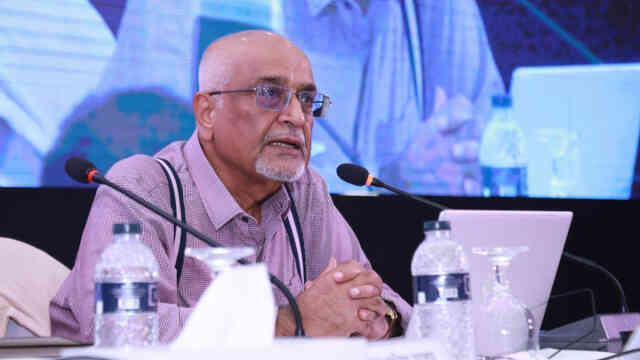
Presenting the findings of the CPD’s six-month performance assessment titled “Six Months of the Government: A Commentary on its Performance” at a media dialogue at its office today, CPD Distinguished Fellow Dr Debapriya Bhattacharya said stronger coordination, credible fiscal planning and structural reforms are required for economic recovery.
He said the assessment examined concrete actions taken during the government’s first 180 days following the February 2026 parliamentary election.
The CPD reviewed 362 observations and grouped them into nine areas, selecting actions considered beneficial, reform-oriented or welfare-enhancing as “Areas of Comfort”.
The assessment focused on measures that had actually translated into implementation rather than merely announced initiatives or pledges.
The CPD said a number of positive, reform-oriented and welfare-enhancing measures had been taken during the government’s first six months, with progress identified across governance, public finance, industry and trade, banking, energy, agriculture, education, health and social protection.
However, the broader 31-indicator recovery scorecard presented a mixed picture, with 12 indicators improving while 19 deteriorated.
Against this backdrop, the CPD urged the government to move beyond individual measures and announcements and adopt a coordinated reform strategy capable of addressing the structural weaknesses holding back economic recovery.
The CPD recommended designing and implementing an integrated reform package covering energy, security, banking, revenue mobilisation, public expenditure, Annual Development Programme (ADP) rationalisation, logistics, digitalisation and the proposed wage commission.
It particularly stressed the need for a credible energy-security package, including time-bound domestic exploration, acceleration of the stalled 150-well programme, strategic fuel stockpiling and diversified energy sourcing.
It also recommended reviewing power purchase agreements to reduce the subsidy burden and intensifying offshore gas exploration, noting that the private sector is aligned with these initiatives.
The think tank called for stronger coordination and collective action among different layers of government, saying there was an acute need for more effective coordination among ministries and government tiers.
It recommended that September 2026 be treated as a critical month for economic reform.
The Finance Minister, it said, should present the relevant reform action plan and key economic issues before Parliament for scrutiny, including the pay scale, banking-sector restructuring, power-sector reform and broader institutional reforms.
The CPD recommended preparing a core budget for October 2026 to June 2027 based on real-time data and a credible fiscal framework.
It also called for aligning the budget’s benchmarks and timelines with the Fiscal Strategic Framework Plan 2026.
It urged the government to set realistic revenue targets, ensure quality public spending and maintain borrowing discipline.
The CPD also recommended stronger monitoring of public financial management, prices and food security, energy, banking, investment, health, education and social protection.
The think tank called for a comprehensive roadmap for the banking sector, including measures to address distressed banks and move towards sustained recovery.
It also stressed the need for reforms capable of generating investment beyond the banking and energy sectors, particularly through deregulation and stronger revenue mobilisation.
The CPD identified several investment-related measures during the first six months as positive developments, including the integration of investment and export services through BanglaBiz and the entry into force of the Invest Bangladesh Act 2026, creating a single authority through the merger of BIDA, BEZA and PPPA.
The expansion of bonded-warehouse facilities beyond the ready-made garment sector to other export-oriented industries was also identified as a positive reform.
The signing of the Comprehensive Economic Partnership Agreement with South Korea, aimed at securing preferential market access for Bangladeshi exports, was another area of comfort.
The CPD also highlighted the establishment of a Startup Fund for new and technology-oriented entrepreneurs, particularly young and women entrepreneurs.
More than 21 agreements and memoranda of understanding signed during the government’s China visit, covering the digital economy, public-private partnerships, infrastructure and a feasibility study for a Bangladesh-China free trade agreement, were also noted positively.
At the institutional level, the CPD recommended greater attention to government commitments, institutional capacity, coordination and accountability, as well as freedom from vested interests.
It said the key question going forward would be whether the government could translate its commitments into concrete roadmaps and implementation, supported by sufficient institutional capacity and regular accountability before Parliament.
The CPD emphasised that the required change was structural rather than merely personnel-based, involving cabinet architecture, appointment practices, coordination mechanisms for economic governance and the overall capacity of institutions to deliver reforms.
Among the “Areas of Comfort” in governance, justice and public administration, the CPD highlighted the ruling party’s decision that its MPs would not accept government-allocated plots or duty-free vehicles. Parliament subsequently abolished the statutory duty-free vehicle entitlement.
The CPD also praised the swift disposal of cases involving violence against women and children, citing the Ramisa rape-murder case, which was resolved in 19 days, a Meherpur child rape case disposed of in 29 working days, and the disposal of 10 death references and appeals by a dedicated High Court bench between June 14 and July 15, 2026.
It identified a series of austerity measures as positive steps, including holding Cabinet meetings at the Secretariat, capping Prime Minister’s Office meal costs at Tk 150 per person, suspending government vehicle purchases, cancelling the post-budget dinner and withdrawing police escorts from 18 ministers.
The introduction of AI-based automated traffic enforcement in Dhaka and its subsequent extension to the Dhaka-Chattogram Highway was also identified as an area of comfort.
The CPD highlighted Bangladesh Public Service Commission reforms aimed at strengthening merit-based recruitment, reducing dependence on coaching centres and shortening the BCS recruitment cycle to one year.
It also noted that the e-Bail Bond system became operational in 28 districts, e-Family Courts were introduced in two districts and an online e-cause list system was put into operation.
Amendments to the Code of Criminal Procedure and Code of Civil Procedure also provided statutory recognition to digital summons and online evidence in specified circumstances.
In public financial management, the CPD noted that the Finance Act 2026 raised the income tax-free threshold for individual taxpayers and withdrew the proposed investment-source disclosure requirement.
The National Board of Revenue expanded mandatory digital income-tax filing and launched e-Return for the 2026-27 tax year, while incentives were introduced for early online filing.
The Finance Act also introduced a five-percent tax rebate, subject to a maximum of Tk 25,000, for eligible individual taxpayers filing returns by September 30, along with a statutory timeframe for refunds of excess tax.
In energy and transport, the introduction of a fully women-operated and women-managed “Pink Bus Service” was described as a significant step towards providing safer public transport for women.
The CPD welcomed the withdrawal by the Bangladesh Energy Regulatory Commission of a proposed electricity tariff hike for low-income and low-use residential consumers. Existing rates for lifeline and first-slab households were retained.
The opening of international bidding for offshore oil and gas exploration under the revised Bangladesh Offshore Model Production Sharing Contract 2026 was also identified as a positive development.
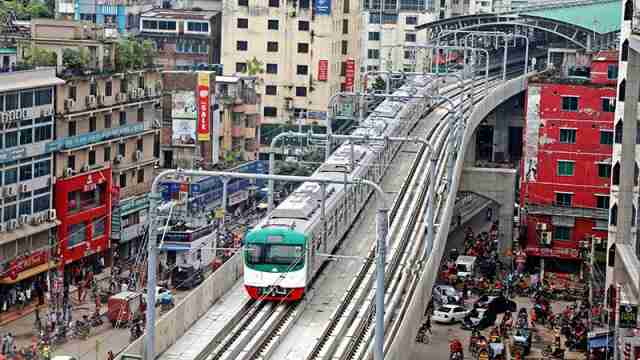
The government’s introduction of a 25-percent discount on metro rail and train fares for senior citizens aged 65 and above, along with special concessions for persons with disabilities, was also highlighted.
In agriculture, the CPD noted the government’s waiver of agricultural loans of up to Tk 10,000, including accrued interest, with public-sector banks writing off eligible farmers’ loans.
The CPD further noted that the government had begun disbursing long-pending retirement and welfare benefits to teachers and employees of MPO-listed non-government educational institutions through EFT and iBAS++, while a pilot programme was launched to distribute free uniforms, shoes and jute bags to primary school students.
In the health sector, reductions or withdrawals of VAT and taxes on essential medical items were identified as important measures.
These included dialysis filters, heart stents, heart valves, pacemakers, oxygenators, eye lenses and certain raw materials used in cancer treatment.
Under social welfare and protection, the CPD noted the rollout of 20,832 Farmer’s Cards, 70,861 Family Cards and 300 Sports Cards as part of the government’s phased nationwide programmes.
The CPD said the positive measures represented encouraging signs, particularly in institutional reform, administrative austerity, digitalisation, investment facilitation, financial-sector restructuring and targeted social welfare.
At the same time, it outlined a broader framework for assessing recovery in the coming period.
It said stabilisation should first be reflected in inflation, exchange and interest rates, followed by a perceptible improvement in GDP growth and eventually a take-off in investment and domestic employment.
The CPD stressed the need for a credible medium-term solution to the energy crisis and reforms capable of generating investment beyond the banking and energy sectors.
It said economic recovery would depend not only on individual policy decisions but also on the government’s ability to establish effective coordination mechanisms, strengthen institutional capacity and ensure accountability.
The think tank therefore urged the government to use the coming months, particularly September 2026, to turn its commitments into concrete, time-bound reform roadmaps and ensure their effective implementation.