শনিবার, ২১ নভেম্বর ২০২৬, ০৫:৪৭ পূর্বাহ্ন



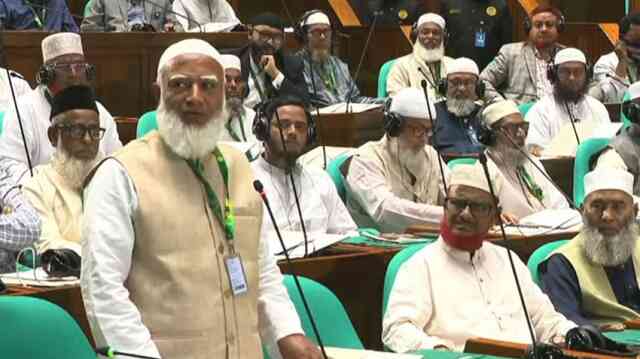
DHAKA, Sept 27, 2026 (BSS)- Leaving behind the past experience of long-standing political divisions and an ineffective parliament, the ruling party has taken initiatives to transform the 13th Jatiya Sangsad into an effective, accountable, and people-centric platform.
As the opposition party has also demonstrated sincerity in this regard efforts are underway to foster a new parliamentary culture.
The initiative has taken to ensure government’s accountability, create scope for reviewing the budget, activating parliamentary standing committees, raising public issues directly in the House, and making national decisions through constructive debate.
At the very outset of the 13th National Parliament, Speaker Hafiz Uddin Ahmad Bir Bikram emphasized the importance of cooperative parliamentary practices between the government and the opposition.
He stressed providing the opposition with the opportunity to play a meaningful and effective role in the House.
According to him, to transform the parliament into the hub of political and administrative activities, it’s required prioritising national interests above partisan outlook.
Deputy Speaker Barrister Kayser Kamal told BSS that public expectations from the current parliament are very high.
Farmers, workers, and commoners in villages watch every parliamentary proceeding via mobile phones, he said.
He said this parliament represents 18 crore people and that is why the members of parliament (MPs) must make decisions through insightful discussions, constructive criticism, and arguments to meet public expectations.
Kamal said both the ruling party and the opposition must play responsible role in institutionalising democracy.
The nation expects the current ruling party and the opposition to work together to institutionalise the democratic journey, he said.
He further added that the National Parliament should serve as the focal point for the country’s overall development as well as for political and democratic practices.
He said the ruling party has the opportunity to demonstrate its stance, just as the opposition has the scopes to offer constructive criticism.
Emphasising the role of both the government and the opposition in making the parliament effective, Chief Whip Nurul Islam Moni said the opposition plays a crucial role alongside the ruling party.
Lawmakers have already taken united initiatives to resolve issues such as the power crisis and fuel supply problems at petrol pumps, he said.
Similarly, Nurul Islam said, the ruling party and opposition members came to a consensus on taking no transport or plot from the government.
Noting that the effectiveness of the parliament largely depends on mindset, he said an excellent rapport and mindset exist between the ruling party and the opposition of the present parliament.
Both parties share a positive attitude toward advancing the country, institutionalising democracy, and safeguarding national independence and sovereignty, Nurul Islam said.
He further remarked that playing an effective role in parliament is not a one-time issue but an ongoing process.
While the opposition carries out programmes on the streets on various demands, their vocal presence within the parliament also contributes to its effectiveness- this is the beauty of democracy, he added.
Leader of the Parliament and Prime Minister, Tarique Rahman, has also spoken of keeping the door open for talks with the opposition in the interest of the country and its people.
In a speech delivered in Parliament, he noted that despite differences of opinion among political parties, there is scope to reach a common position on the issues of national interest.
Meanwhile, the Leader of the Opposition Dr Md Shafiqur Rahman has pledged to play the role of a “logical and constructive opposition” in parliament.
His party’s stance is that they will neither blindly support the government nor engage in irrational opposition.
The opposition has expressed its commitment to play a responsible role regarding public welfare, accountability, and national reforms.
Emphasis has also been put on making the parliamentary standing committees effective.
There are currently 50 parliamentary standing committees, comprising 39 ministry-related standing committees and 11 committees related to parliamentary affairs.
Members of the opposition have also been included in these committees. In formation of committees, it was mentionable that the Deputy Leader of the Opposition Dr Syed Abdullah Mohammed Taher has been made the chairman of public accounts committee.
The participation of members from both the ruling and opposition parties in parliamentary committees has created opportunities to ensure the accountability of the executives and to review the utilisation of public funds.
As an initiative to make parliamentary proceedings more data-driven, a ‘Budget Helpdesk’ for MPs was launched prior to the budget session.
Its objective is to assist MPs in budget discussions by providing research-based information and data. This has paved the way for analyzing the budget based on facts and figures beyond political rhetoric.
Three sessions of the 13th National Parliament- constituted following the general elections held on February 12, 2024 have taken place so far. According to parliamentary records, the third session concluded on September 10 last.
The first session began on March 12 and ended on April 30 this year. During this session, which spanned 25 working days, 94 bills were passed. Five standing committees and two special committees were formed. Sixteen notices were received under Rule 62 of the Rules of Procedure, with discussions held on two of them. Of the nine notices received under Rule 68, a brief discussion took place on one.
Discussions were held on 38 notices accepted under Rule 71, and 207- each lasting two minutes- were delivered under the Rule 71A.
During that session, notices for 93 questions were submitted for the Prime Minister to answer; and he answered 35 of them. Notices for 2,509 questions were received for ministers of various ministries, and the ministers answered 1,778 questions.
A discussion lasting 40 hours and 14 minutes was held on the President’s address.
The second session began on June 7, concluded on July 15, spanning 26 working days. The general discussion on the budget lasted 48 hours and 51 minutes over 14 working days, with 316 MPs participating. Ten government bills were passed during this session. Out of 715 notices submitted under Rule 71 of the Rules of Procedure, 24 were accepted, and 22 were discussed.
Additionally, 125 “two-minute notices” under Rule 71A were discussed. Four motions for resolution under Rule 131 were discussed and disposed of.
For the second session, 278 questions were submitted for the Prime Minister to answer; of these, answers to 35 questions were tabled. Of 5,031 questions submitted for ministers of various ministries, 3,474 were answered.
The third session commenced on August 27 and concluded on September 10. Spanning nine working days, this session saw the passage of six bills, including the National Human Rights Commission Bill, 2026; the Prevention and Remedy of Enforced Disappearance Bill, 2026; Transfer of Property (Amendment) Act, 2026; the Bank Resolution (Amendment) Bill, 2026; and Special Response Battalion (SRB) Bill 2026.
During this session, 35 parliamentary committees were reconstituted along with a special committee. MPs submitted 144 questions for the Prime Minister, of which the premier answered 15.
Regarding questions for ministers of various ministries, 2,676 were submitted, and the ministers answered 1,678 of them. Overall, a continuity of parliamentary proceedings has been established across the first three sessions of the 13th National Parliament through law-making, question-and-answer sessions, budget discussions, the formation of parliamentary committees, and deliberations on various matters of public interest.