বৃহস্পতিবার, ১৫ অক্টোবর ২০২৬, ১০:১৬ অপরাহ্ন



DHAKA, Oct 15, 2026 (BSS) – The users of prepaid electricity metres receive a 0.5 percent rebate on the remaining balance after recharging, offering some financial benefit while encouraging efficient electricity use and helping households manage their power expenses.
“The government offered 0.5 percent rebate on the remaining balance of prepaid electricity metres recharge to encourage wider use of it. VAT, demand charges and metre rent are adjusted during the first recharge of each month. The 0.5 percent rebate is then added to the remaining amount,” a power division official said here recently.
He said consumers do not have to pay a security deposit to obtain a prepaid connection. Residential consumers are charged a monthly demand charge of Taka 42 per kilowatt of sanctioned load, along with five percent value-added tax (VAT).
Metres are supplied by electricity distribution companies, the monthly rental charge is Taka 40 for a single-phase metre and Taka 250 for a three-phase metre.VAT, demand charges and meter rent are adjusted during the first recharge of each month. The 0.5 percent rebate is then added to the remaining amount.
If a residential consumer with a sanctioned load of two kilowatts makes an initial recharge of Taka 1,000 in January, Taka 171.62 will be deducted for VAT, demand charges and meter rent. After the 0.5 percent rebate is added to the remaining amount, Taka 832.52 will be available in the meter for electricity consumption.
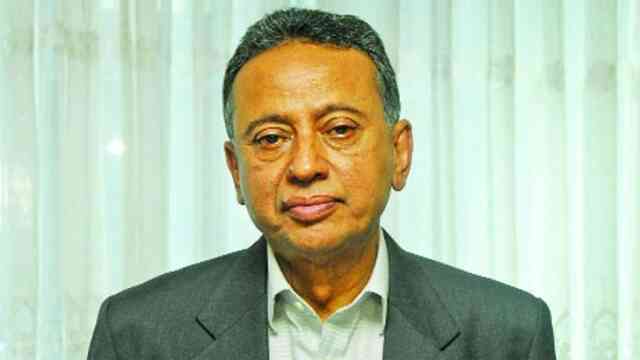
Power Division Additional Secretary Noor Ahmad told BSS that prepaid metres offer several benefits, including the rebate, which can help reduce unnecessary expenditure by consumers.
He said digital systems are essential for the electricity management in the future.
“Prepaid metres also offer advance revenue collection, reduced system losses, overload control, improved load management and greater billing accuracy”.
The prepaid metering system can help reduce billing-related complications in rented properties and government residential facilities too, he added.
According to the power division sources, consumers can recharge their prepaid metres any time through mobile financial services, debit and credit cards, while recharges are also available at vending stations operated by electricity distribution companies, point-of-sale (POS) agents and bank booths.
They said prepaid metering systems enable consumers to check their recharge amounts, remaining balances and electricity consumption, inform their power usage and control monthly expenditure.
On the other side, consumers using postpaid metres generally receive their bills at the end of the month, making it comparatively difficult to track expenses in advance.
The prepaid metering system also reduces manpower costs associated with bill preparation and distribution, improves customer service and provides emergency credit and “friendly hour” facilities.
It also allows consumers to continue using electricity during weekly holidays and public holidays under specific provision, the power division sources said.
Besides, the prepaid metres issue warning signals when balances are going to run low. Under the designated “friendly hour” facility, consumers may continue using electricity through emergency credit even after their balances are zero, according to the prepaid metre method.
Consumers in different parts of the country told BSS that one of the main advantages of prepaid metres is the ability to estimate electricity expenses in advance.
By monitoring the remaining balance, users can adjust their consumption according to their needs and reduce unexpectedly large bill at the end of the month, they said.
A user in Jatrabari in the city Saleh Hasan said that he plans his monthly electricity consumption based on the recharge amount at the beginning of the month.
He recharges the metre at home easily, while checking the remaining balance helps him avoid unnecessary electricity use.
Muzahid Sheikh, a resident of Bogura town and a customer of the Northern Electricity Supply PLC (NESCO), shared a similar experience saying a prepaid metre had been installed at his home recently.
Previously, he could not know how much his monthly electricity bill would be. Now, he recharges the metre according to his plan and pays closer attention to electricity consumption.
He said the basic cost of electricity is the same under prepaid and postpaid metering systems, but prepaid metres can help consumers control expenses through more conscious use.
The power division officials said prepaid metering prevents metre readers to visit households for bills and distribution accordingly. The prepaid metering system saves manpower and travel costs.
Meanwhile, advance payment also facilitates revenue collection by distribution companies and reduces complications of outstanding bills, he said.
A PDB official said unused balance can be used next month without new recharge. If a consumer does not recharge in a particular month, applicable demand charges and metre rent for that month and previous months are adjusted during the next recharge, he said.
Shafiqul Alam, lead energy analyst at the Institute for Energy Economics and Financial Analysis (IEEFA), told BSS that greater public awareness is crucial to address consumers’ concerns and difficulties regarding prepaid meters and to make the system more popular.
The Dhaka Electric Supply Company Limited (DESCO) app provides information on remaining metre balances and electricity consumption, which can help ease consumers’ concerns about bills. Emergency credit facilities can also help consumers avoid immediate disconnection when their recharge balance runs out.
According to information, around 12 lakh of the Dhaka Power Distribution Company Limited’s (DPDC) out 20 lakh customers use prepaid metres, NESCO’s more than 23 lakh customers, around 14 lakh have been brought under prepaid metering system.
Meanwhile, 9,56,381 of the Dhaka Electric Supply PLC’s (DESCO) 14,11,430 customers use prepaid meters. The West Zone Power Distribution Company Limited (WZPDCL), installed 6,66,627 prepaid metres out of 17,55,914 customers.
The Bangladesh Rural Electrification Board (REB) serves approximately 3.8 crore customers, of whom around 15 lakh have prepaid metres. The central hotline, 16999, is available for information and complaints related to prepaid metres.
Electricity distribution companies also operate their own hotlines.
NESCO Managing Director Mashiur Rahman told BSS that in line with the government’s decision, all electricity consumers across the country would gradually be brought under prepaid metering system.