বৃহস্পতিবার, ১৫ অক্টোবর ২০২৬, ১০:১২ অপরাহ্ন


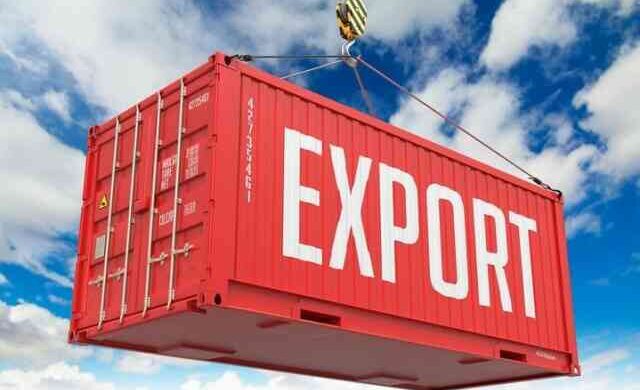
DHAKA, Oct 15, 2026 (BSS) – Spain has overtaken Germany as the largest European Union destination for Bangladesh’s ready-made garments (RMG), according to Export Promotion Bureau (EPB) data.
In the first quarter (July-September) of FY 2026-27, Bangladesh exported apparel worth US$1,148.46 million to Spain, up 13.73% from $1,009.84 million a year earlier. Spain’s share of Bangladesh’s EU apparel exports during the 1st quarter rose to 23.42%.
Germany, long the leading EU market, slipped to second place with $1,122.98 million, a marginal 0.15% decline from $1,124.70 million. Its share stood at 22.90%. A year earlier, Germany led Spain by about $115 million for the quarter. This year Spain leads by about $25 million.
September shows the same trend:
Spain also led in this September alone, with exports of $343.46 million, up 19.03% from $288.55 million a year earlier, giving it a 24.36% share. Germany recorded $318.24 million, down 2.68%, with a 22.57% share.
Other top markets:
Apparel exports to the Netherlands totaled $597.49 million in July-September, up 9.02% (12.18% share). September exports were $157.60 million, up 10.58%.
Bangladesh’s RMG exports to France reached $449.41 million, down 4.91% (9.16% share). September exports fell 3.88% to $145.87 million.
The five markets together accounted for about $3,720 million, roughly 76% of Bangladesh’s total apparel exports to the EU in the quarter.
Overall EU performance:
Total apparel exports to the EU rose 3.33% to $4,904.02 million in July-September, from $4,746.10 million a year earlier.
September exports reached $1,410.11 million, up 5.53% from $1,336.21 million. Exports to other EU countries fell 2.24% to $1,183.76 million for the quarter.
Talking to BSS, former BGMEA Director Mohiuddin Rubel said Bangladesh needs to diversify its export markets, develop high-value and non-cotton-based products, and comply with European Union regulations to sustain export growth in Europe, an important market for the country.
Although Bangladesh’s export performance in Europe has remained positive amid economic challenges in the region, the country still lags behind its overall export growth target, he said.
Rubel stressed the need to comply with European due diligence requirements, energy-related standards, carbon policies and other regulatory requirements to maintain Bangladesh’s competitiveness in the market.
“Bangladesh also needs to move towards non-cotton-based and higher-value products, an area where the country has yet to make sufficient progress,” he said.
He expressed optimism that Bangladesh could retain and expand its market share in Europe if it improved domestic production capacity, addressed the energy crisis and met the requirements of European buyers.