সোমবার, ১৯ অক্টোবর ২০২৬, ০৫:৫৬ অপরাহ্ন


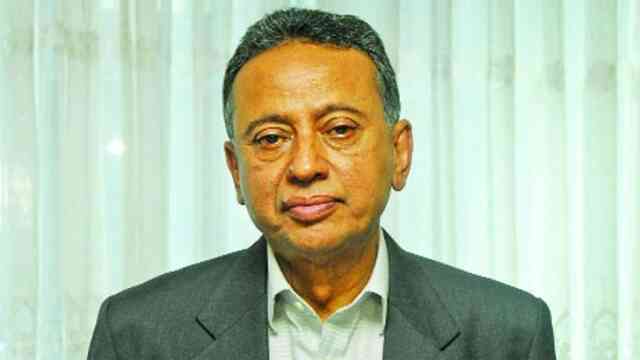
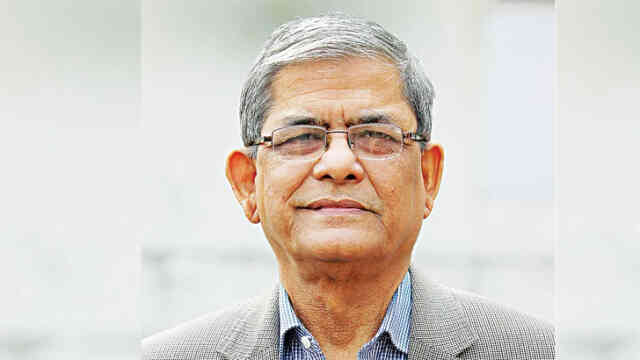
DHAKA, Oct 19, 2026 (BSS) – Finance and Planning Minister Amir Khosru Mahmud Chowdhury today said the country’s economy, including the energy sector, is expected to stabilise by the second year of the government’s tenure, with the third year about to taking off and the fourth and fifth years bringing stronger growth.
“By the end of the second year, everything should be stabilised, including the energy sector. The third year should be about to take off, and the fourth and fifth years will be the take-off period,” he said.
The minister made the remarks while addressing a high-level luncheon meeting titled “Sustainable Power and Energy: Driving Investment in Bangladesh,” organised by the Foreign Investors’ Chamber of Commerce and Industry (FICCI) at a hotel in the capital.
Khosru said the government is making big reforms in taxation system although there is a deep-rooted issue with the tax department.
“We all know that but gradually you’ll see the improvement slowly there are some contradiction in tax policies that we are looking into. We had a meeting day before yesterday with the chairman and the private sector as well. So, this will go on but give us little time,” he said.
Acknowledging the challenges facing the economy, Amir Khosru said the government had to confront a major energy crisis within a week of taking office, following the war in the Middle East, on top of inherited financial liabilities and structural weaknesses.
“We have not done a great job, but we have not done too badly considering the crisis,” he said, adding that the government had already faced an out-of-pocket burden of around US$7 billion due to the energy crisis.
He said energy and power had become central to economic activities, particularly amid global geopolitical tensions and increasingly cut-throat competition. Bangladesh must reduce the cost of doing business, improve the business environment and make domestic industries more competitive, he added.
The minister acknowledged that Bangladesh had remained an overregulated economy for a long time, making deregulation a major priority for the government. He said his budget speech devoted four and a half pages to deregulation, although deep-rooted problems in tax collection, the financial sector and macroeconomic management made the reform process challenging.
On domestic gas exploration, Amir Khosru said the government was preparing to expand both onshore and offshore exploration through production-sharing contracts (PSCs) and the state-owned Bangladesh Petroleum Exploration and Production Company Ltd (BAPEX).
“BAPEX is going to drill 150 wells,” he said, adding that the government had already approved the purchase of equipment for the company through the relevant purchase committee.
He expressed hope that the exploration initiatives would move forward soon, helping Bangladesh develop its domestic energy resources and reduce dependence on imported fuels.
On renewable energy, the minister said the government had introduced a six-month policy window to accelerate investment, while offering tax incentives for solar projects, including imported supporting structures.
He said the government aimed to add around 10 gigawatts of solar power capacity over the next two to three years, describing the target as achievable. “Rooftop solar installations by households and industries were already increasing,” he added.
The government was also allowing households to sell surplus electricity to the grid at rates designed to encourage solar investment. Greater renewable generation would help ease demand for gas and reduce pressure on gas-fired power plants, he said.
Regarding coal-based power generation, Amir Khosru said the government was considering ways to utilise domestic coal resources while addressing political and environmental concerns.
He said the government was also working to address the immediate gas shortage through the development of three to four floating storage and regasification units (FSRUs), with private investors from countries including South Korea and China showing interest.
However, he cautioned that FSRU projects could take around one and a half years to complete, leaving limited scope for an immediate solution to the energy crisis. The government was also discussing shore-based LNG terminals and oil storage facilities to strengthen long-term energy security.
He said the government had identified potential sites, including Matarbari and another location near Khulna with a navigational draft of around 20 metres, to facilitate the entry of large vessels and reduce transportation costs.
The minister said the government expected to complete its broader energy security plan within two to two and a half years, covering LNG facilities, shore-based terminals and oil storage infrastructure.
On financing, he said the government was receiving encouraging responses from multilateral development partners, bilateral sources and international capital markets.
He also referred to the Prime Minister’s meeting with senior Wall Street representatives, expressing hope that foreign investment would support Bangladesh’s energy sector, capital market and banking system.
He said the government was exploring an equity fund in Hong Kong dedicated to Bangladesh and advancing the public-private partnership (PPP) model. The government had also begun disinvesting from around 10 to 12 state-owned enterprises, including jute and sugar mills, to attract investment and utilise existing industrial infrastructure and land.
Turning to the financial sector, Amir Khosru said banking-sector weaknesses and alleged large-scale capital flight had created serious challenges for economic recovery. He cited an estimated US$235 billion taken out of the country and stressed that financial-sector stability and a stronger capital market were essential to mobilise investment.
He also announced major tax administration reforms, including the division of the National Board of Revenue (NBR) into separate policy-making and enforcement bodies, to address conflicts of interest, improve efficiency and reduce corruption.
The minister urged the private sector to prepare for a challenging transition while expressing confidence that gradual reforms would improve the investment climate and economic stability.
Earlier, FICCI President Rupali Haque Chowdhury called for stronger domestic gas exploration, diversified LNG supplies, modernised energy infrastructure, improved energy efficiency and faster investment in renewable energy.
The FICCI said global energy disruptions had exposed Bangladesh’s vulnerability to imported fuels, increasing industrial costs, disrupting production and creating uncertainty for businesses.
Delivering the keynote address, Shafiqul Alam, lead analyst for Bangladesh Energy at the Institute for Energy Economics and Financial Analysis (IEEFA), warned that domestic gas reserves could be depleted by 2036 without new discoveries. He highlighted the need to expand exploration, reduce gas losses, promote rooftop solar and improve industrial energy efficiency.
Participants in the panel discussion also stressed the importance of predictable regulations, investment-friendly policies, green financing and stronger public-private collaboration to ensure reliable and affordable energy supplies and sustain industrial competitiveness.
The panel discussion was moderated by Mahbub ur Rahman, CEO of HSBC Bangladesh and former director of the FICCI Board.
The panelists included Shu Xiong, president and managing director of Chevron Bangladesh; Professor Dr. Mohammad Tamim, vice-chancellor of Independent University, Bangladesh; Dr. Nazneen Ahmed, executive director of the Centre for Policy Dialogue (CPD); and Fazlul Hoque, administrator of the Federation of Bangladesh Chambers of Commerce and Industry (FBCCI).