সোমবার, ১৯ অক্টোবর ২০২৬, ০৫:৫৬ অপরাহ্ন



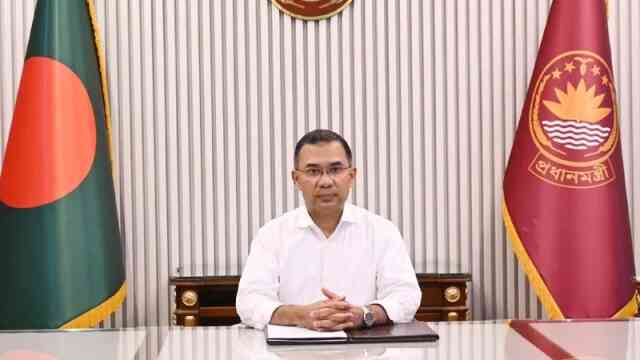
DHAKA, Oct 19, 2026 (BSS) – A decision on Bangladesh’s request to defer its graduation from the least developed country (LDC) category by three years is expected within October, Commerce Minister Khandakar Abdul Muktadir said today.
“The government has prepared a time-bound action plan to utilise the additional time for strengthening the country’s preparedness for graduation. It also aims to conclude negotiations on a free trade agreement (FTA) with the European Union (EU) before Bangladesh graduates from the LDC category,” he said.
Khandakar Abdul Muktadir, also serves as the Minister of Industries and the Minister of Textiles and Jute, made the remarks while addressing a seminar titled “Challenges and Way Forward for Bangladesh’s LDC Graduation” at the Economic Reporters Forum (ERF) conference room today.
The ERF and the Bangladesh Foreign Trade Institute (BFTI) jointly organised the event.
Explaining the progress of the deferral request, he said Bangladesh had passed the stage of the United Nations Committee for Development Policy (CDP) and subsequently submitted a request to the UN Economic and Social Council (ECOSOC) for a three-year extension.
The minister said the European Union and other relevant stakeholders had also expressed agreement with Bangladesh receiving additional time.
“I am very optimistic that we will see a resolution of the matter next week or the week after,” he said, expressing hope that a decision would come before the November 24 deadline.
Explaining the rationale for seeking the extension, the minister said Bangladesh had not been adequately prepared to address the challenges associated with LDC graduation.
He observed that graduation had been politically glorified without sufficient attention to the economic and financial challenges involved.
He said inadequate focus had been placed on maximising the benefits of graduation while building the capacity needed to address its potential disadvantages.
The government has shared a time-bound action plan with the EU outlining how Bangladesh intends to use the additional period, he added.
Highlighting initiatives to preserve market access for Bangladeshi goods and services, the minister said the government aimed to conclude Comprehensive Economic Partnership Agreements (CEPAs) or FTAs with eight to 10 countries during 2026 and 2027.
A chief negotiator has been appointed for FTA negotiations with the EU, and preparations are underway to begin the first round of technical discussions, although no date has yet been finalised, he added.
The government aims to complete the negotiations before Bangladesh’s LDC graduation, he said.
On preparations for obtaining the EU’s Generalised Scheme of Preferences Plus (GSP+) trade facility, Muktadir said the government would continue working on that option alongside the FTA initiative.
“However, I hope we will not have to take the GSP+ option, as we will complete the FTA before that,” he said.
The process of joining the Regional Comprehensive Economic Partnership (RCEP) is also progressing. Bangladesh has received in-principle approval for inclusion, and procedural work is now underway, he added.
The minister said attracting investment would require not only access to international markets but also uninterrupted energy supplies, simpler business procedures and a transparent legal framework for dispute resolution.
He stressed the importance of ensuring both adequate purchasing power among domestic consumers and access to foreign markets for export-oriented industries.
Citing the lengthy process of starting a business, Muktadir said entrepreneurs took an average of 355 days to complete the process from obtaining a trade licence, opening a bank account and securing initial
clearances to obtaining an import registration certificate and opening a letter of credit for machinery imports.
Such prolonged procedures make it difficult for entrepreneurs to sustain their enthusiasm and investment momentum, he said.
To address the problem, the government plans to introduce a single online portal for issuing trade licences.
Applicants will be able to submit the required documents and pay fees from anywhere in the country or abroad, with the fees automatically transferred to the relevant local government authority, he added.
The government is also working to bring the services of the Registrar of Joint Stock Companies and Firms (RJSC) fully online, extend the validity of various licences to three to five years and introduce coordinated inspections instead of separate inspections by multiple agencies.
Muktadir expressed hope that these reforms would help reduce the time entrepreneurs spend obtaining licences and permits by 2027.
Identifying the energy shortage as one of the major obstacles to new investment, the minister said work was underway to install additional floating LNG terminals and drill gas wells to increase supply. The government
is also taking steps to expand solar power generation.
He noted that Bangladesh remained vulnerable to disruptions in international supply chains because of inadequate storage capacity for LNG and essential commodities.
Emphasising the need to strengthen the country’s resilience against external shocks, he called for developing strategic reserves and expanding storage facilities.
The government is pursuing an integrated strategy to boost investor confidence, simplify business operations and secure access to international markets, he said.
The seminar was chaired by ERF President Daulat Akhtar Mala. BFTI Chief Executive Officer Dr Mostafa Abid Khan presented the keynote paper while ERF Executive Committee member SSM Moinul Haque moderated the event.