সোমবার, ১৯ অক্টোবর ২০২৬, ০৬:৩৮ অপরাহ্ন



DHAKA, Oct 19, 2026 (BSS) — Solar-powered irrigation systems introduced under a government initiative are transforming agriculture in Bangladesh’s Barind region by cutting irrigation costs, expanding cultivation opportunities and promoting efficient use of water.
Over the past two years, 32 solar-powered irrigation pumps have been installed in eight districts of Rajshahi Division, particularly in off-grid, drought-prone remote areas.
According to project officials, the initiative has brought farmers’ irrigation costs close to “zero” and increased cropping intensity by approximately 50 percent.
The initiative is being implemented under the Rajshahi Division Agricultural Development Project to expand the use of renewable energy, significantly reduce farmers’ irrigation expenses and ensure the efficient and judicious use of water.
The Barind Multipurpose Development Authority (BMDA) and the Department of Agricultural Extension (DAE) are jointly working to expand the technology across the region.
Officials concerned with the Ministry of Agriculture said the project is directly benefiting 3,200 farmers across 67 upazilas in the Rajshahi Division. The project is scheduled to conclude in June 2027.
The initiative primarily aims to reduce farmers’ dependence on conventional fossil fuels, particularly diesel, and the national electricity grid, thereby helping establish a more self-reliant agricultural system.
Through the long-term expansion of renewable energy, the project seeks to make agriculture in the Barind region more modern and climate-resilient.
With experience of the success of solar-powered irrigation in the Barind region, agricultural experts and environmentalists believe that replacing conventional diesel-powered pumps with solar-powered alternatives can help reduce the country’s overall dependence on imported fossil fuels.
The technology also offers opportunities to lower agricultural energy costs and promote environmentally sustainable farming practices.
At a time when global warming, adverse climate change, water scarcity and rising agricultural production costs are putting increasing pressure on farmers, renewable energy-based irrigation systems are opening new possibilities for the Barind region.
The government initiative of solar-powered irrigation in Barind region is helping reduce irrigation expenses, improve water-use efficiency and bring previously uncultivated land under production.
In the long term, the expansion of such technology could play an important role in making agriculture in the region more sustainable, profitable and farmer-friendly.
Project officials said one of the three initiative’s key features is the provision of modern irrigation technology to marginal and low-income farmers free of charges, helping ease their financial burden.
The project covers three categories of solar irrigation systems: fixed, portable and precision solar irrigation.
Under the fixed solar irrigation category, 24 permanent solar irrigation plants, each with a capacity of two horsepower, have been installed in different parts of the Barind region.
These plants enable farmers to irrigate designated agricultural lands regularly and conveniently.
Under the portable solar irrigation category, eight easily transportable solar units have been provided.
Farmers can move these units from one field to another or use them across different plots and orchards, allowing greater flexibility in irrigation.
The third category, precision solar irrigation, focuses on modern orchard management. A total of 10 precision solar irrigation units have been installed, each specifically designed to serve a designated one-acre orchard.
According to project officials, these systems offer significant advantages because they do not require connections to the national electricity grid.
They also eliminate farmers’ concerns over high diesel prices and fuel shortages, making irrigation possible even in remote areas without electricity.
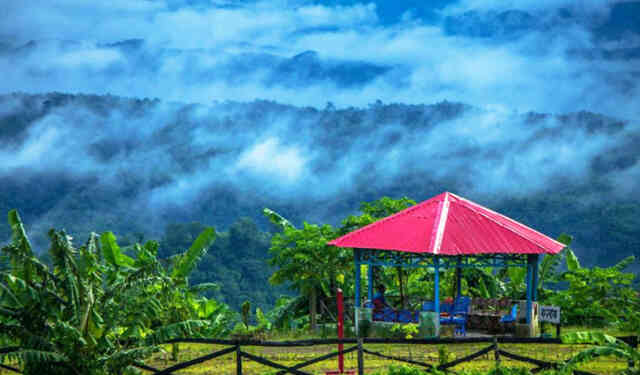
The Barind region is widely known for its drought-prone conditions and growing water scarcity.
Over the past several decades, groundwater levels have declined significantly, making the efficient use of water increasingly important for agricultural sustainability.
Against this backdrop, agricultural scientists have placed greater emphasis on water-saving technologies.
The project’s precision solar irrigation system combines solar-powered pumps with drip irrigation technology, which delivers water drop by drop directly to plant roots through a network of pipes.
The technology significantly reduces water wastage while helping maintain soil moisture for longer periods.
It supplies the necessary moisture to plant roots while reducing weed growth. Project-related information indicates that the system also offers opportunities to improve fruit production and quality.
Farmers in the region have already begun experiencing the benefits of drip irrigation at the field level, according to officials concerned.
Mohammad Alamgir Hossain, a beneficiary farmer from Chapainawabganj Sadar Upazila, said irrigation using diesel-powered pumps previously accounted for a substantial share of his agricultural production costs.
He also faced difficulties obtaining sufficient diesel during the irrigation season, causing considerable anxiety.
“Now, with government support, I can irrigate my orchard easily using solar energy. Both costs and water wastage have decreased, and taking care of the trees has become much easier and more comfortable than before,” he said.
Agriculture officials have also expressed positive assessments of the technology’s effectiveness.
Mohammad Abdul Mannan, agriculture officer of Paba Upazila in Rajshahi, told the BSS that the benefits and effectiveness of the technology had already been demonstrated successfully at the field level.
He said the technology was playing a unique role in strengthening farmers’ capacity and reducing their dependence on the national electricity grid and imported diesel in a severely drought-prone and water-stressed region such as Barind.
Agriculturist S. M. Hasanuzzaman, director of Rajshahi Division Agricultural Development Project, told BSS that 32 solar-powered irrigation pumps had been installed in different districts of the division over the past two years.
As a result, farmers’ irrigation costs had fallen to nearly zero, he said.
Hasanuzzaman explained that declining groundwater levels in the drought-prone Barind region had reduced the operational effectiveness of deep tube wells.
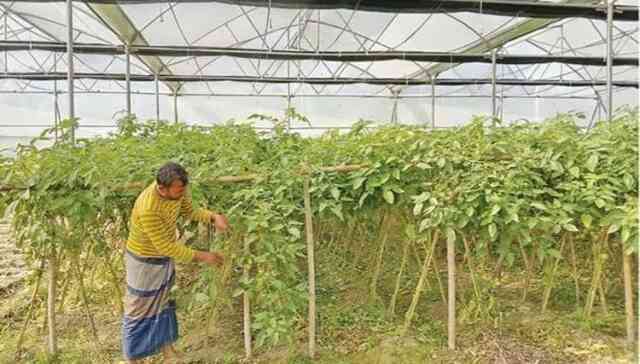
The introduction of solar-powered pumps has made it possible to cultivate previously uncultivated and fallow lands, producing three rice crops a year alongside other crops.
As a result, he said cropping intensity had increased by approximately 50 percent.
He also expressed optimism that the pumps could remain operational for 20 to 25 years if properly maintained.